
CPT Code 90791 - Pysch Diagnostic Evaluation Guide
What is CPT Code 90791?
CPT code 90791 describes a psychiatric diagnostic evaluation without medical services. It is one of the most frequently billed behavioral health codes and represents the initial comprehensive assessment of a patient presenting with mental health, behavioral, or emotional concerns.
Unlike psychotherapy codes, CPT 90791 is intended to establish or confirm a psychiatric diagnosis, assess the patient's psychosocial history, evaluate risk factors, and develop an initial treatment plan. Because it serves as the entry point into behavioral health treatment, commercial insurers, Medicare Advantage plans, Medicaid programs, and managed care organizations frequently review this code for medical necessity, frequency limitations, provider eligibility, and duplicate billing.
For payment integrity teams, CPT 90791 is also a common audit target because improper repeat billing, insufficient documentation, incorrect provider types, and medical necessity deficiencies may result in denials, recoupments, or compliance findings.
AMA Definition vs. Plain Language
AMA Description:
Psychiatric diagnostic evaluation.
In Plain English
CPT 90791 is the initial mental health evaluation performed before psychotherapy or other psychiatric treatment begins. During this visit, the provider gathers a comprehensive understanding of the patient's mental health condition, symptoms, history, functioning, and treatment needs.
Unlike psychotherapy sessions, the primary objective of CPT 90791 is assessment—not treatment.
Typical components include:
- Presenting complaint
- Psychiatric history
- Medical history
- Family history
- Social history
- Mental status examination
- Risk assessment
- Diagnostic impression
- Initial treatment recommendations
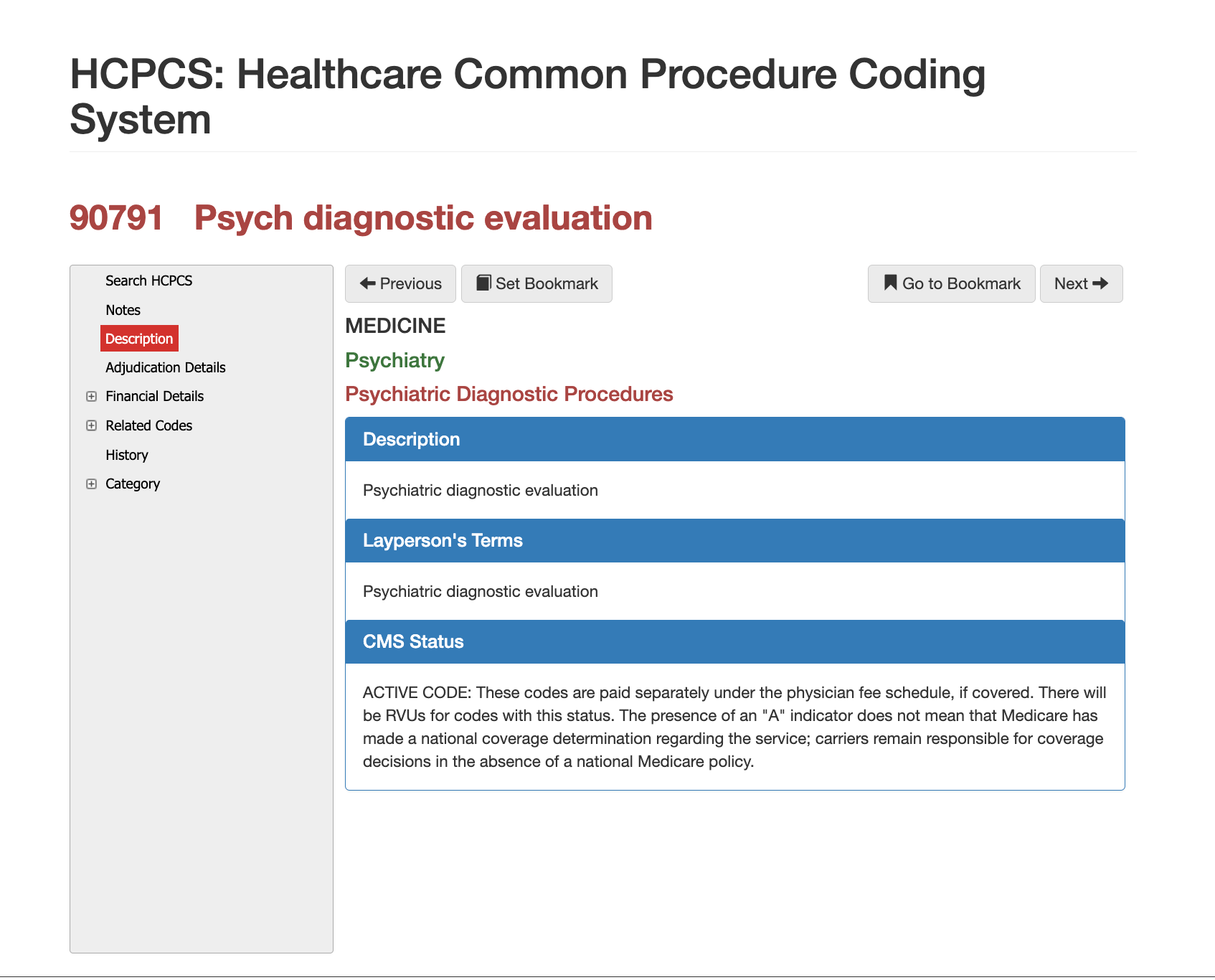
Virtual AuthTech® classifies CPT 90791 as a psychiatry code within the Medicine section of CPT and identifies it as an active Medicare physician fee schedule service.
When Should CPT Code 90791 Be Reported?
CPT 90791 is generally reported when a patient receives a comprehensive psychiatric diagnostic evaluation before treatment begins. Common clinical situations include:
- New patient behavioral health evaluations
- Depression assessment
- Anxiety disorders
- PTSD evaluations
- Bipolar disorder assessment
- ADHD evaluations
- Personality disorder assessment
- Substance use evaluations
- Eating disorders
- Trauma-related conditions
- Crisis follow-up requiring complete diagnostic assessment
The evaluation establishes the diagnosis and treatment plan that supports future psychotherapy or medication management.
- Claims reviewers frequently verify that documentation demonstrates why a full psychiatric evaluation was medically necessary instead of a routine follow-up visit or psychotherapy session.
When Should CPT 90791 NOT Be Reported?
One of the most common coding mistakes is billing CPT 90791 when another behavioral health code more accurately describes the encounter. Examples include:
- Established psychotherapy visits
- Medication management visits
- Brief follow-up assessments
- Psychological testing
- Neuropsychological testing
- Routine counseling sessions
- Family therapy
- Group therapy
Many payers restrict how often CPT 90791 may be billed for the same patient unless documentation clearly supports a new diagnostic evaluation.
Real-World Claims Scenario
A behavioral health clinic evaluates a new patient referred by a primary care physician for worsening depression and suicidal ideation. During a 75-minute encounter, the psychologist performs:
- Comprehensive psychosocial history
- Mental status examination
- Suicide risk assessment
- Family history review
- DSM diagnostic assessment
- Initial treatment planning
- No psychotherapy is performed.
In this scenario, CPT 90791 is generally the appropriate code because the encounter is diagnostic rather than therapeutic.
If the same patient returns one week later for cognitive behavioral therapy, psychotherapy codes—not CPT 90791—would generally apply.
Medical Necessity Requirements
Medical necessity remains one of the leading causes of denials for psychiatric evaluations. Documentation should clearly support:
- New psychiatric symptoms
- Change in mental status
- Referral for behavioral health assessment
- Diagnostic uncertainty
- Need to establish treatment
- Clinical decision making
- Functional impairment
Payers frequently expect documentation explaining why the evaluation was necessary and how it influenced diagnosis or treatment planning.
Documentation Checklist:
A well-documented psychiatric diagnostic evaluation generally includes:
- Chief complaint
- History of present illness
- Psychiatric history
- Medical history
- Medication review
- Family psychiatric history
- Social history
- Substance use history
- Mental status examination
- Risk assessment
- DSM diagnosis
- Clinical impressions
- Treatment recommendations
- Provider signature
Claims examiners often deny or question CPT 90791 when documentation consists primarily of generalized intake forms without individualized clinical findings.
Common Audit Findings
Payment integrity organizations frequently review CPT 90791 for:
- Repeat psychiatric evaluations performed too frequently
- Duplicate billing
- Insufficient medical necessity
- Missing mental status examination
- Missing treatment plan
- Incomplete psychiatric history
- Incorrect provider credentials
- Billing psychotherapy instead of diagnostic evaluation
- Copy-and-paste documentation
- Unsupported diagnoses
These findings may trigger both prepayment review and post-payment audits.
Place of Service Considerations
Our Code Scrubbing database iVECoder® identifies multiple applicable Places of Service depending on payer rules and provider type. Common locations include:
- POS 11 – Office
- POS 22 – Outpatient Hospital
- POS 49 – Independent Clinic
- Community behavioral health centers
- Mental health clinics
- Hospital outpatient psychiatry departments
Claims reviewers verify that the billed Place of Service matches the rendering provider, facility type, and payer authorization.
Modifier Consideration for 90791
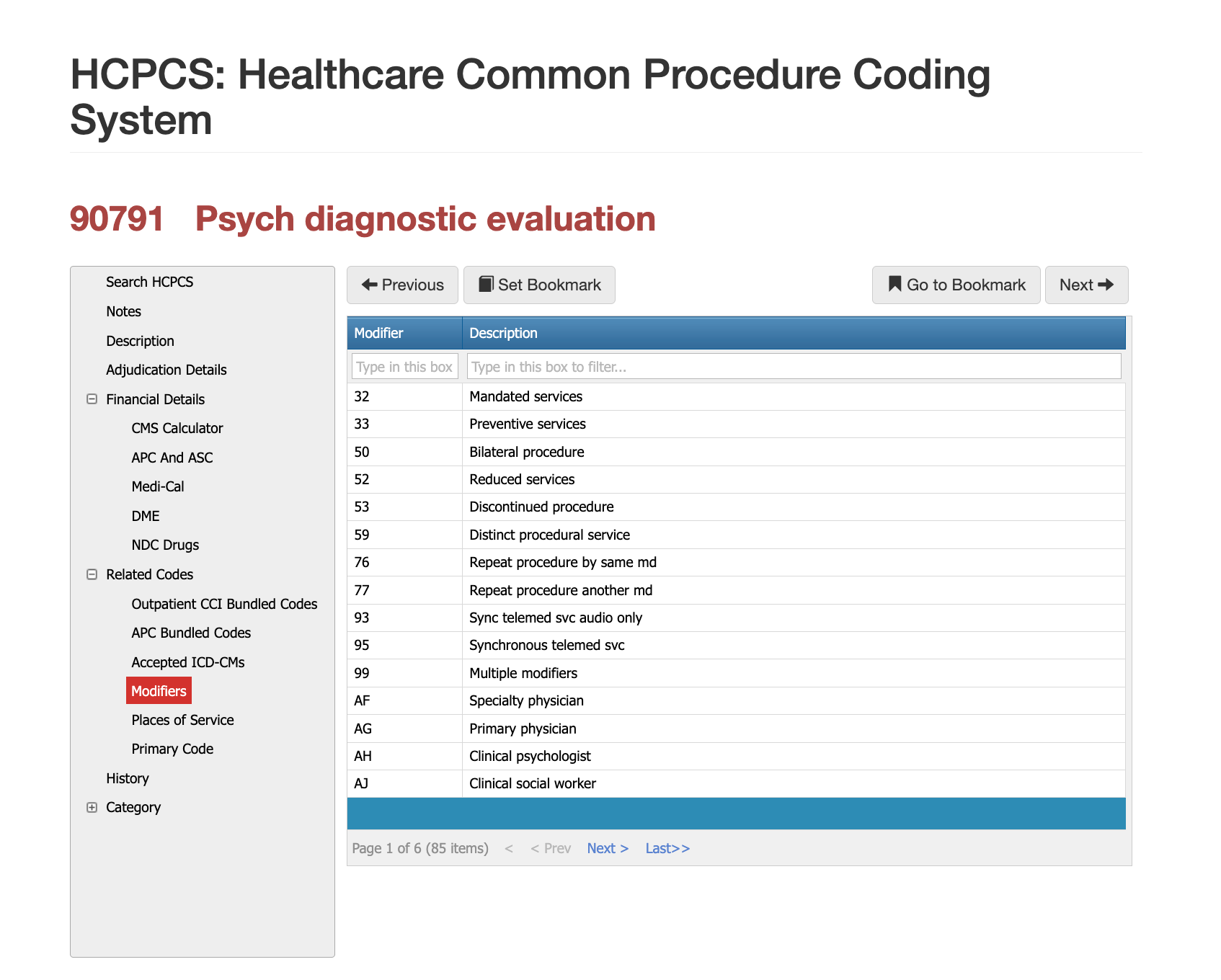
Virtual AuthTech®, the twin sister of iVECoder, is provided to the payer organization and identifies numerous modifiers that may be applicable depending on payer policy. Frequently encountered modifiers include:
- Modifier 95 – Synchronous telemedicine services
- Modifier 93 – Audio-only telehealth (when allowed)
- Modifier 32 – Mandated services
- Modifier 59 – Distinct procedural service (limited circumstances)
- Modifier 99 – Multiple modifiers
Not every modifier applies to every payer or clinical scenario. Claims reviewers verify that documentation supports modifier usage and that the modifier is permitted for CPT 90791 under applicable payer policy.
Related Behavioral Health CPT Codes
Choosing the correct behavioral health code depends on the primary purpose of the encounter rather than its duration alone.
| CPT Code | Description | Difference |
|---|---|---|
| 90792 | Psychiatric diagnostic evaluation with medical services | Includes medical services by a physician or qualified prescriber |
| 90832 | Psychotherapy, 30 minutes | Therapeutic treatment rather than diagnostic evaluation |
| 90834 | Psychotherapy, 45 minutes | Follow-up psychotherapy |
| 90837 | Psychotherapy, 60 minutes | Extended psychotherapy |
| 90839 | Psychotherapy for crisis | Emergency behavioral health intervention |
Bundling and Related Coding Considerations for 90791
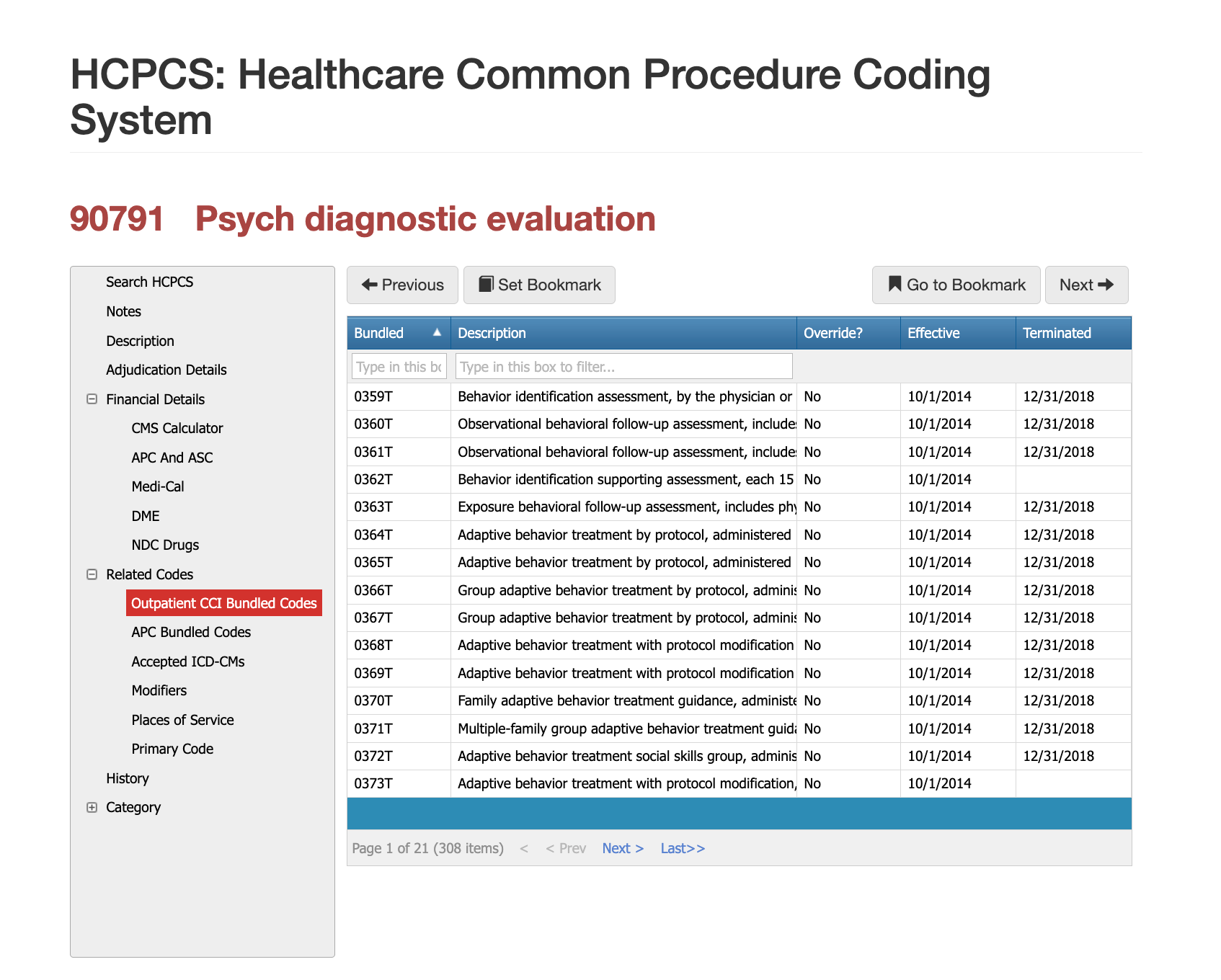
iVECoder®, identifies numerous related code relationships involving CPT 90791, including outpatient CCI edits, APC bundled procedures, and other payment relationships.
Claims reviewers commonly evaluate:
- Duplicate psychiatric evaluations
- Improper separate billing
- Component overlap
- NCCI edits
- APC payment rules
- Modifier requirements
- Provider eligibility
Improper code combinations may result in:
- Claim denials
- Payment reductions
- Medical record requests
Post-payment recoupments
Medicare Payment Considerations for 90791
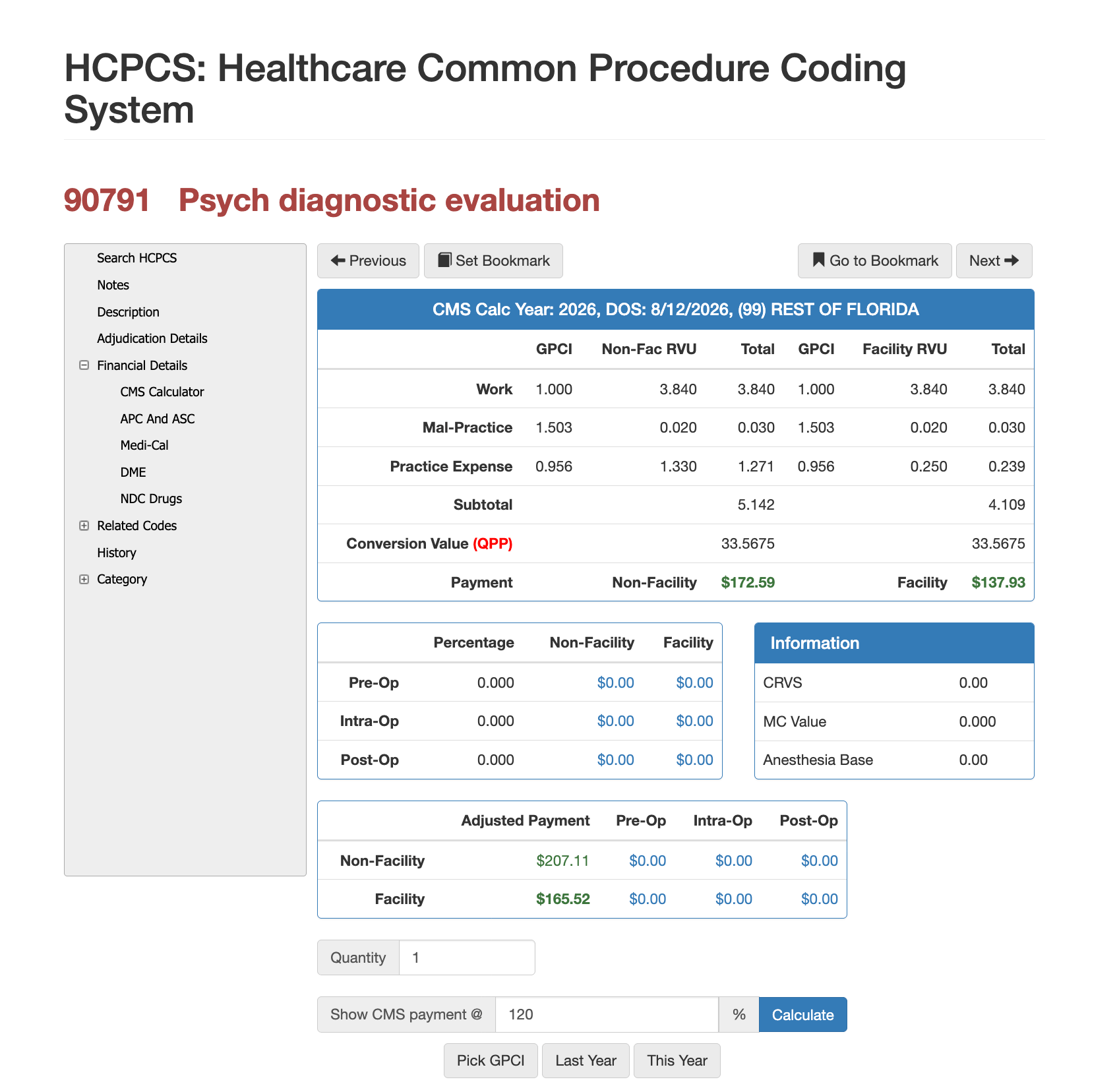
Virtual AuthTech® provides reimbursement intelligence for CPT 90791, including:
- Relative Value Units (RVUs)
- Geographic Practice Cost Indices (GPCI)
- Non-facility payment
- Facility payment
- Practice expense
- Malpractice expense
- Work RVUs
Because Medicare reimbursement changes annually, organizations should reference the applicable CMS Physician Fee Schedule for the current payment year.
Historical Coding Changes for 90791
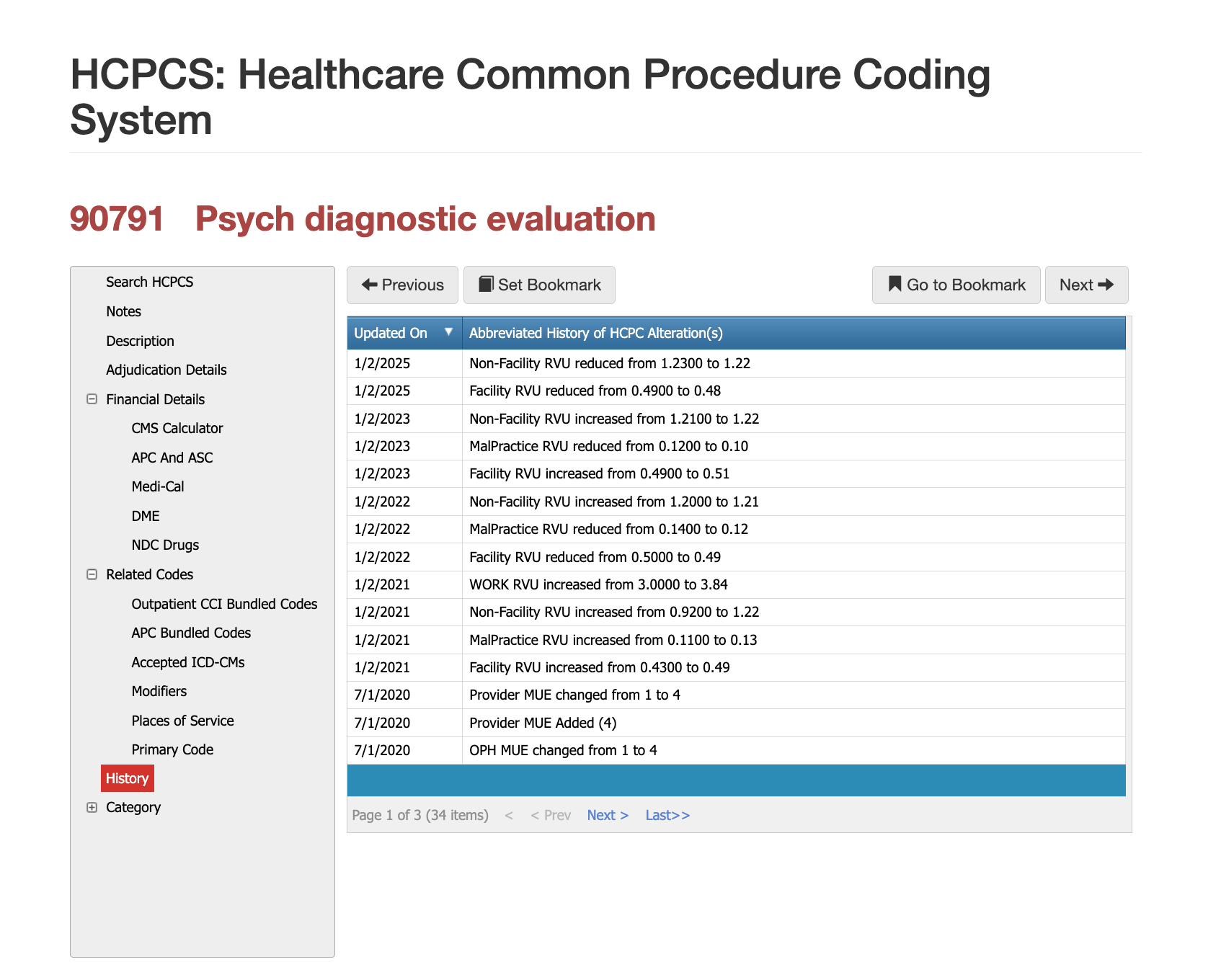
Behavioral health reimbursement continues to evolve. Virtual AuthTech® tracks historical changes affecting CPT 90791, including:
- RVU updates
- MUE revisions
- Facility reimbursement changes
- Practice expense adjustments
- Medicare payment modifications
Reviewing historical changes helps compliance teams understand reimbursement trends and anticipate future coding updates.
Common Questions about 90791
Can CPT 90791 be billed more than once?
Sometimes. Many payers allow repeat psychiatric diagnostic evaluations only when documentation supports a new clinical circumstance or significant change in the patient's condition.
Does CPT 90791 include psychotherapy?
No. CPT 90791 represents a diagnostic evaluation rather than psychotherapy treatment.
Does CPT 90791 require medical necessity?
Yes. Documentation should clearly establish why a comprehensive psychiatric evaluation was clinically appropriate.
Is prior authorization required?
Some commercial and managed Medicaid plans require authorization before behavioral health evaluations. Requirements vary by payer.
Why is CPT 90791 commonly audited?
Because it is a high-volume behavioral health code that establishes future treatment, auditors frequently examine documentation quality, frequency of billing, diagnosis support, provider eligibility, and medical necessity.
Key Takeaways
CPT code 90791 represents far more than an initial behavioral health visit—it establishes the diagnostic foundation for a patient's treatment plan and is therefore subject to significant payer scrutiny. Successful reimbursement depends on demonstrating medical necessity, documenting a comprehensive psychiatric evaluation, selecting the correct behavioral health code, and complying with payer-specific frequency, modifier, and authorization requirements.
For healthcare organizations focused on coding accuracy, payment integrity, and audit readiness, understanding how CPT 90791 interacts with Medicare payment rules, APC methodologies, modifier logic, and bundled services can significantly reduce denials while improving documentation quality and compliance.
About PCG
For more than 30 years, PCG Software has helped health plans, provider organizations, and delegated entities improve coding accuracy, payment integrity, compliance, and fraud, waste, and abuse detection through payer-focused software and claims auditing expertise.
Click to share with others