Duplicate Medical Billing - Payer and Provider Perspectives
Summary: Duplicate medical billing is not simply a clerical mistake or an isolated provider issue. It is a systemic data integrity problem that originates at the encounter level and propagates through claims submission, adjudication systems, patient billing workflows, and downstream collections activity. When duplicate charges are not detected early, they distort encounter data, inflate payments, create audit exposure, and in some cases result in patients being pursued for debt they do not legitimately owe.
This article explains how duplicate medical billing occurs, how CMS and federal regulators evaluate these errors, why duplicate charges persist across payer and provider systems, and how organizations can prevent improper payments and regulatory risk by addressing the problem at the encounter data level rather than reacting after the fact.
What is Duplicate Medical Billing
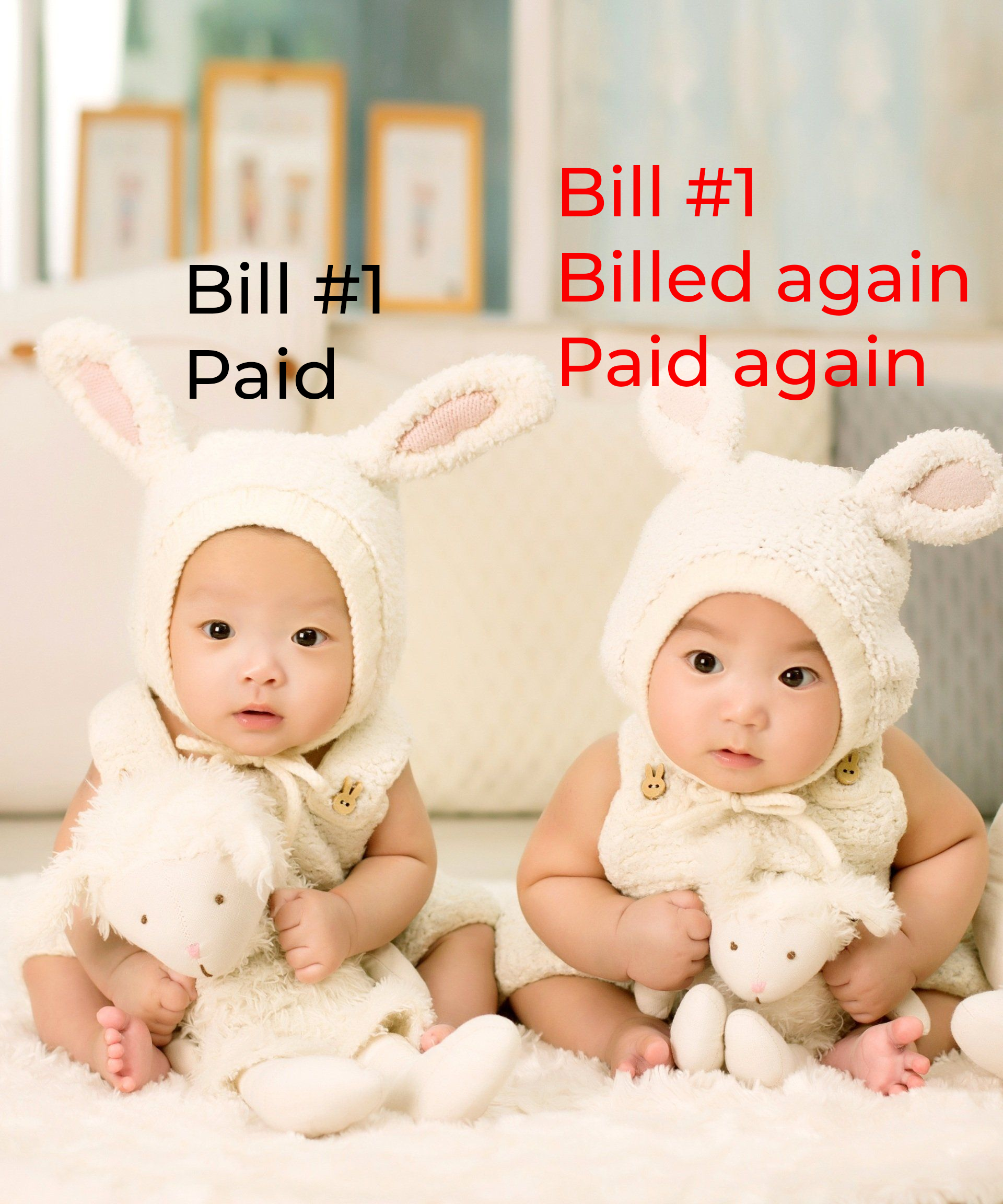
Duplicate medical billing occurs when the same service, procedure, or charge is billed more than once for the same patient, date of service, and clinical encounter. This may happen within a single claim, across multiple claims, or through separate billing streams generated by different systems or entities involved in the care episode.
In many cases, duplicate billing is not intentional. It often results from fragmented systems, overlapping workflows, poor encounter reconciliation, or misaligned data feeds between clinical documentation, billing platforms, clearinghouses, and payer adjudication engines. Once duplicate data enters the system, it can be difficult to detect without proactive controls, particularly when claims are paid and never flagged as errors.
How Duplicate Billing Begins at the Encounter Level
Duplicate billing almost always traces back to encounter data issues. When encounters are created, modified, resubmitted, or split across systems, small inconsistencies can lead to the same service being represented multiple times. This commonly occurs when encounters are reopened for corrections, when charges are manually re-entered, or when multiple systems generate overlapping claim outputs from the same underlying clinical record.
Because encounter data feeds multiple downstream processes, duplicate services may be paid once, twice, or even more before detection. In many cases, the original encounter appears clinically valid, which allows the duplicate charge to pass initial edits and adjudication logic.
CMS Perspective on Duplicate Billing
CMS has long treated duplicate billing as a payment integrity issue rather than a benign billing error. Medicare policy explicitly prohibits payment for services that are duplicated, unbundled, or otherwise improperly reported, even when documentation exists for the underlying care.
From CMS’s perspective, duplicate billing represents a failure of internal controls. Payment responsibility does not shift simply because an error was unintentional or system-generated. When duplicate claims are identified through audits, post-payment reviews, or data analysis, CMS expects repayment, corrective action, and in some cases enhanced monitoring or enforcement.
Importantly, CMS evaluates duplicate billing patterns at scale. A single error may be resolved through correction, but repeated or systemic duplication can trigger audits, extrapolated overpayment findings, and increased scrutiny of an organization’s compliance infrastructure.

Why Duplicate Billing is so prevalent...
One of the most significant challenges with duplicate billing is that many duplicate charges are paid without triggering denials. Traditional claims edits are designed to identify coding conflicts, eligibility issues, and coverage limitations, not necessarily to reconcile encounter-level duplication across time, systems, or claim iterations.
When duplicate billing is not denied immediately, it is embedded in paid claims data, encounter repositories, quality reporting datasets, and patient billing statements. Over time, these errors accumulate, creating financial exposure and regulatory risk that may only surface months or years later during audits or investigations
Clinics Automating Resubmission of Claims
Many clinics rely on automated resubmission workflows designed to maximize first-pass payment rates and reduce manual follow-up. While these systems improve operational efficiency, they can unintentionally introduce duplicate billing risk when original claims are partially paid, adjusted, or still pending in payer systems. Without encounter-level reconciliation, resubmitted claims may replicate previously billed services rather than correcting the specific issue that triggered resubmission.
This risk increases when resubmissions are generated based on status codes or time thresholds rather than a full comparison of encounter history, remittance data, and prior submissions. Over time, these automated processes can create duplicative charges that are paid and embedded in claims data, often without triggering standard denial logic. Detecting these errors typically requires retrospective review across multiple claim iterations rather than single-claim analysis.
Payers Not auditing for entire episode of care
Duplicate billing frequently occurs when payers adjudicate claims in isolation rather than evaluating services across the full episode of care. Traditional claims processing focuses on line-level edits, date-of-service checks, and benefit rules, but may not account for overlapping encounters, staged procedures, or services billed across multiple providers within the same clinical episode.
When episode-level context is not evaluated, duplicate services can appear valid when reviewed individually, even though they represent redundant or previously billed care. These payments often remain undetected until post-payment audits, external reviews, or regulatory inquiries occur. The absence of longitudinal, episode-based analysis allows duplicative billing to persist silently, increasing financial exposure and compliance risk over time.
Need a solution, learn about VE (click here)
Nefarious RCM and Billing Companies are doing it on purpose
While many duplicate billing issues stem from system limitations or process gaps, some cases involve intentional exploitation of billing complexity by third-party revenue cycle management (RCM) or billing vendors. These entities may leverage fragmented payer visibility, delayed audits, or automated submission volume to repeatedly bill services with minimal immediate detection.
Such behavior often relies on the assumption that only a small percentage of claims will be reviewed in depth and that overpayments will remain undiscovered or unrecovered. Patterns may include repeated submissions of the same service under slightly modified codes, overlapping dates of service, or resubmissions following partial payments. Identifying intentional duplication requires pattern-based analysis across claims, encounters, and time—not isolated claim review—making advanced analytics essential for detection and enforcement.
Impact on Payers
For payers, duplicate billing directly undermines payment accuracy and audit defensibility. Overpayments caused by duplicate charges distort financial reporting, inflate medical expense ratios, and weaken confidence in claims operations.
When regulators or oversight agencies identify duplicate payments, payers must demonstrate that reasonable controls existed to prevent and detect these errors. Failure to do so can result in repayment obligations, corrective action plans, and reputational damage. Duplicate billing also complicates recovery efforts, particularly when overpayments have already flowed through provider remittance and patient billing cycles.
Impact on Providers
For providers, duplicate billing creates significant operational and compliance risk even when errors are unintentional. Duplicate claims may trigger post-payment audits, repayment demands, or payer investigations that consume staff time and resources.
In addition, duplicate billing can damage payer relationships and contribute to increased claim scrutiny or prepayment review. Providers may also face patient trust issues when duplicate charges appear on statements or are sent to collections, particularly if errors are not promptly identified and resolved.
Consumer and Regulatory Scrutiny of Duplicate Billing
Beyond payer-provider dynamics, duplicate medical billing has drawn increasing attention from consumer protection and regulatory agencies. Federal regulators have raised concerns about duplicate and inflated medical charges being passed on to patients, particularly when errors are sent to collections without adequate verification.
When duplicate billing flows into patient debt, the issue extends beyond claims accuracy into regulatory compliance and consumer harm. Organizations that fail to identify and correct duplicate charges before billing patients may face additional scrutiny related to billing practices, disclosures, and collection activity.
Preventing Duplicate Billing at the Encounter Level with AI
The most effective way to prevent duplicate medical billing is to address it at the encounter level before claims are finalized and submitted. This requires consistent encounter reconciliation, version control, and validation across clinical documentation systems, billing platforms, and claim submission workflows. When encounter data is accurate and controlled at the source, duplicate charges are far less likely to propagate downstream into claims, payments, and patient billing.
Relying solely on post-payment recovery or manual audits is inefficient and reactive. By the time duplicate billing is identified through audits or recovery efforts, the data has often already flowed through multiple systems, increasing the cost, complexity, and operational burden of correction. In many cases, overpayments must be unwound across remittance, accounting, and patient billing processes, creating avoidable disruption.
As healthcare billing environments grow more complex, manual processes alone cannot reliably detect duplicate billing patterns at scale. Artificial intelligence and advanced analytics play a critical role in evaluating encounter data, claim history, and billing activity in near real time. AI-driven systems can identify overlapping encounters, repeated services, and duplicative charges before payment or shortly after submission, allowing organizations to intervene early.
By flagging potential duplicates at or near the point of submission, AI enables payers and providers to proactively correct errors, reduce improper payments, and strengthen compliance without disrupting clinical workflows or relying on costly retrospective audits. This encounter-level approach transforms duplicate billing prevention from a recovery exercise into a sustainable payment integrity control.
California’s shift to a 30-day calendar payment mandate is more than a regulatory update—it marks a fundamental reset in how health plans must operate. Compressed timelines, heightened accuracy requirements, and escalating compliance pressures will challenge every payer, MSO, and IPA that relies on manual review processes or outdated adjudication workflows. Organizations that modernize now—investing in real-time auditing, automation, intelligent routing, and tighter operational controls—will not only meet the new deadline but strengthen provider relationships, reduce financial leakage, and protect themselves from regulatory exposure. Those that postpone transformation will face escalating remediation costs, widening error rates, and mounting scrutiny as 2026 approaches. AB 3275 clearly signals the future: faster payments, greater accountability, and a healthcare ecosystem where operational excellence is no longer optional. With the right tools and strategy, payers can turn this mandate into an opportunity to improve accuracy, reduce waste, and build a more resilient infrastructure for the years ahead.
About PCG
For more than 30 years, PCG Software has helped health plans, provider organizations, and delegated entities improve coding accuracy, payment integrity, compliance, and fraud, waste, and abuse detection through payer-focused software and claims auditing expertise.
Click to share with others